
How to Choose a PVC Vehicle Tarp: Materials, Fabric Weight and Measurements
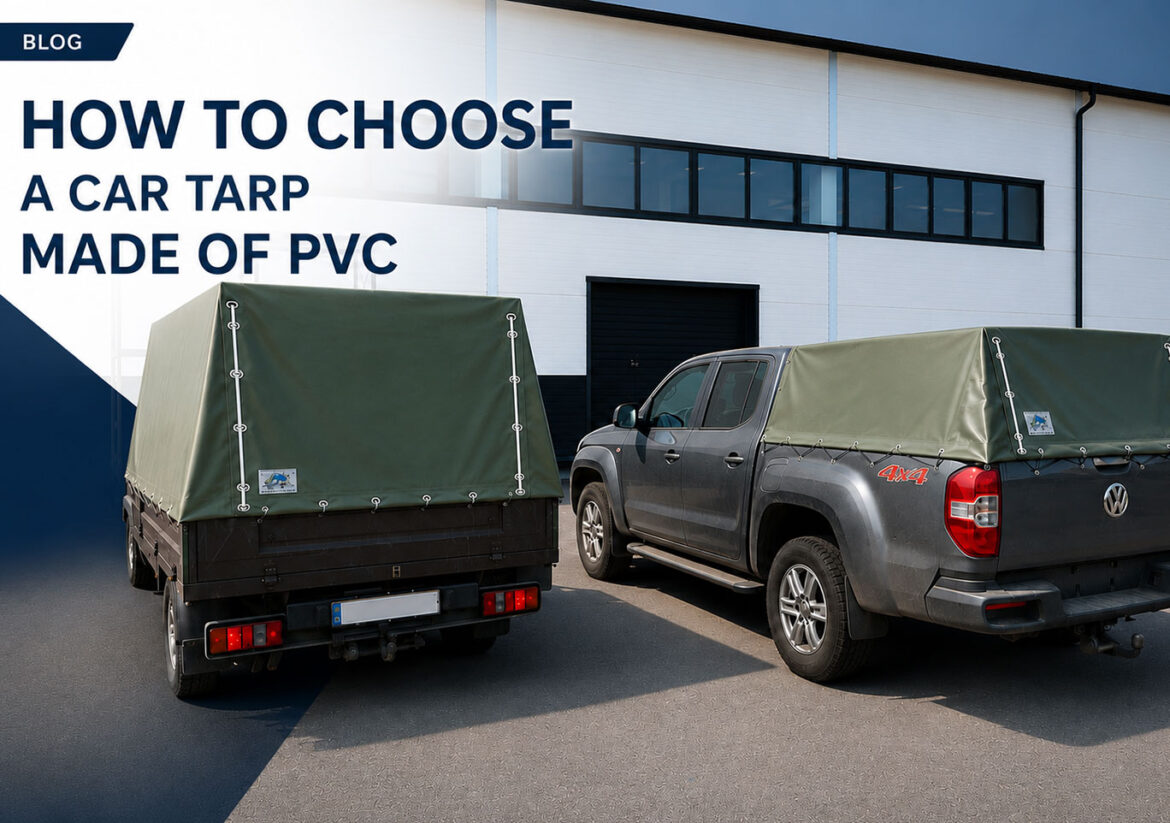
A vehicle tarp is a sheet of technical fabric that covers the cargo area: a pickup truck bed, a trailer body, a truck frame. It looks simple, which is why it is often underestimated — as if it were just a piece of material cut to the right size.
In reality a tarp performs several jobs at once, and each of them places its own demands on the material. Below we look at what tarps are made of, how to choose the fabric and what to consider before placing an order.
What a vehicle tarp does
Protection from rain and snow. The most obvious function, and the most demanding one for the material. A tarp has to keep water out not only from above, but also along the joined panels, around the edges and at every fastening point.
Protection from dust and road dirt. In dry weather this matters just as much as protection from rain. Cargo that arrives covered in a layer of dust from a field road often has to be cleaned or sorted before it can be used.
Protection from sunlight. Ultraviolet radiation damages not only the tarp itself but also what is underneath it: plastics, paints and coatings, equipment and many building materials.
Keeping cargo in place. A properly tensioned tarp works as part of the load securing system — it prevents lightweight cargo from being lifted by the airflow at speed.
Keeping the load out of sight. For construction crews, farms and volunteer organisations this is often a serious argument in itself: the contents of the body are not visible from the road or from a car park.
These requirements conflict with one another more often than people expect. A material that holds water well is usually heavier. A fabric that resists tearing folds less easily. A fastening system that holds securely on the motorway takes longer to open. Choosing a tarp is therefore always a matter of balance for a specific use case, rather than a search for the single best option.
PVC or canvas: which material to choose
Historically, vehicle tarps were made from canvas — a cotton fabric with a water-repellent treatment. Today professional manufacturing has moved almost entirely to PVC. Here is why, parameter by parameter.
| Parameter | PVC-coated fabric | Canvas |
|---|---|---|
| Waterproofing | The material is waterproof: the PVC coating neither absorbs nor lets water through | Water-repellent rather than waterproof. The treatment washes out over time and the fabric begins to leak |
| Behaviour in rain | Water runs off, the sheet does not gain weight | The fibre absorbs water and the tarp can become noticeably heavier |
| Frost resistance | Stays flexible at sub-zero temperatures | Wet canvas stiffens in frost and can crack along the folds |
| UV resistance | High: the coating contains light stabilisers | Lower: the fibre gradually loses strength in sunlight |
| Tear strength | High, thanks to the reinforcing mesh in the base | Depends on the weight; generally lower for the same mass |
| Maintenance | Washes off with water | Needs drying and periodic re-treatment |
| Repair | A patch is welded or bonded on, seams can be restored | Repaired mainly by stitching or patching; restoring the original water resistance is more difficult |
| Appearance | Wide colour range, the surface cleans easily | Limited colours, dirt is absorbed into the fibre |
| Weight | Lighter and easier to handle | Heavier, especially once wet |
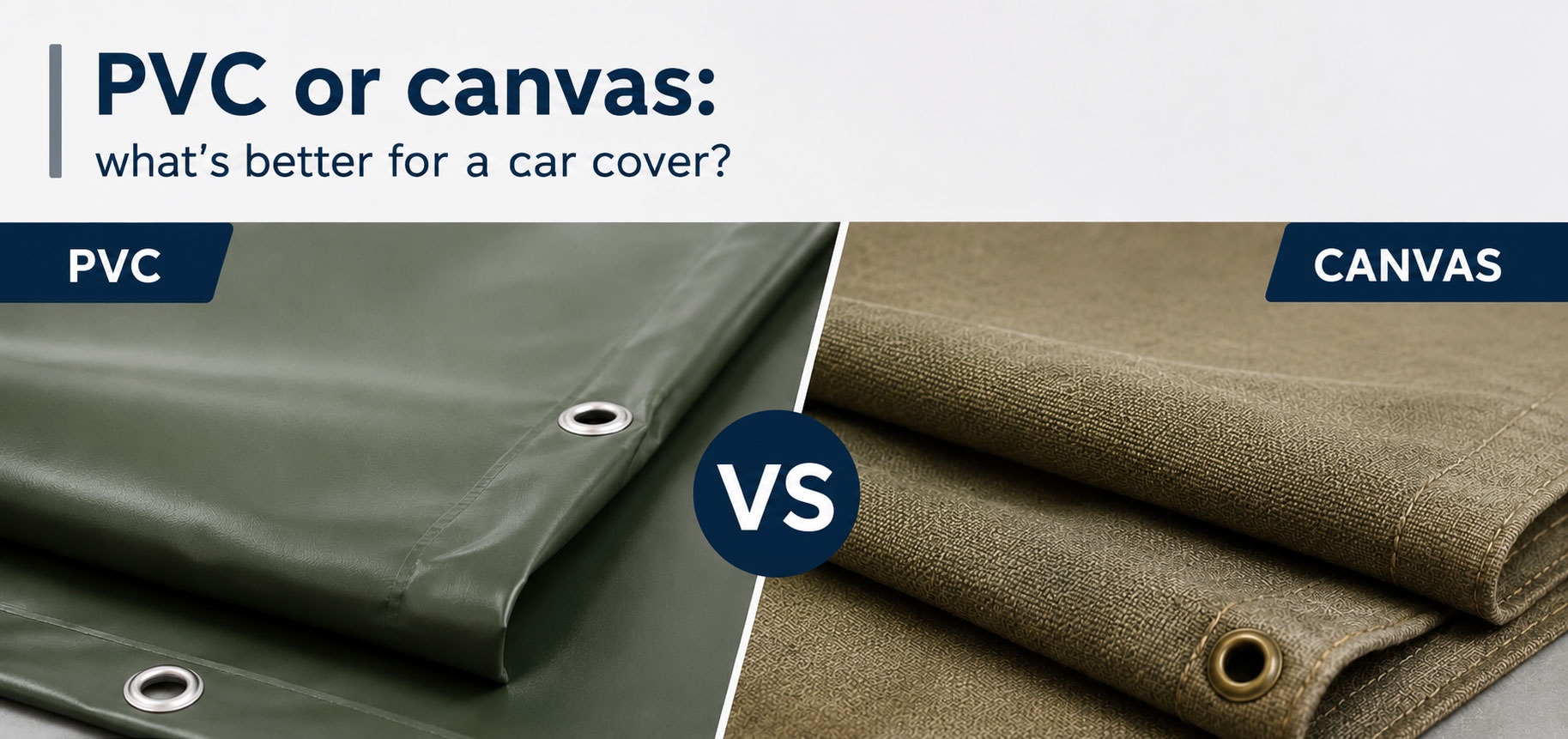
Where canvas still makes sense. It breathes, which makes it suitable wherever ventilation matters: hay covers, temporary shelters and certain agricultural applications. For a vehicle tarp, where the whole point is to keep water out, that property becomes a drawback.
What to know about price. The widespread belief that canvas is the cheaper option no longer reflects reality. PVC fabric costs less — and it requires no re-treatment, no special drying and no careful storage. The saving is not something that arrives over time: it is there from the start, both in purchase price and in running costs.
We manufacture PVC vehicle tarps to individual measurements — for your body and your existing frame. Quotations are free of charge.
Get a quoteWhy professional tarps are made from PVC
The answer lies in how the material is built, not in marketing.
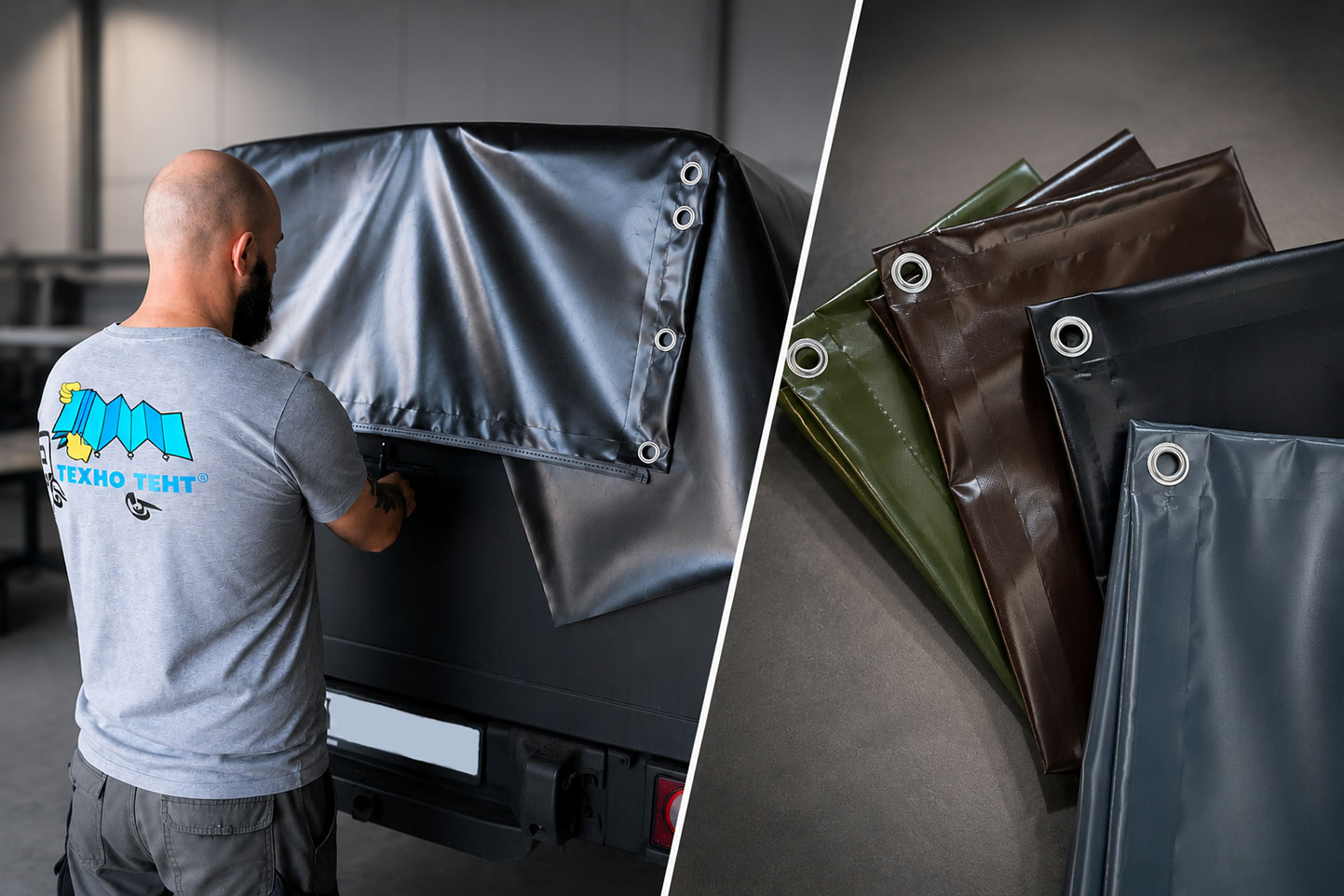
PVC fabric is not a fabric in the usual sense. It is a three-layer composite: a polyester mesh in the centre carries the tensile load, while polyvinyl chloride coating on both sides provides waterproofing and protection from the elements. The textile handles the strength, the polymer handles the sealing. Each layer does its own job.
This is why PVC can be welded. The polymer coating melts under heat or high-frequency current, and two panels fuse into a single continuous material with no needle holes. That is a fundamental difference from any natural fabric, where every seam is a row of perforations through which water will eventually find its way.
The reinforcing mesh contains tears. If a PVC sheet is damaged by a sharp edge of cargo, the tear usually stops at the nearest threads of the base rather than running further. This is not a guarantee against damage, but it is precisely what makes the material suitable for transport work, where cargo is rarely tidy.
The material is stable over time. PVC does not rot, does not support mould growth and needs no water-repellent treatment. With proper use, PVC-coated fabric retains its working properties for many seasons, and what wears out first is usually not the sheet itself but the areas of friction and the fastenings.
The material can be repaired. A damaged section can be restored using the same method by which the product was made. This means a tarp does not become disposable after the first serious damage — and that has a real effect on the total cost of ownership.
Practice confirms the theory: the products brought to us for repair almost always have intact fabric together with worn fittings or areas rubbed through where the sheet meets the frame. That is why, in professional manufacturing, the question is not “PVC or not” but “which fabric weight and which design” — which is what we look at next.
Fabric weight: what it means and why 650 g/m² is the working standard
The weight of PVC fabric is measured in grams per square metre and written as g/m². It is the mass of one square metre of the finished material, including the reinforcing mesh and the coating on both sides.
What the figure actually tells you. It is not a direct measure of strength, although it is often presented that way. A higher weight usually means a thicker coating and a stronger base, but the result also depends on the quality of the mesh and the composition of the polymer. Fabric of 900 g/m² from a weak producer can perform worse than 650 g/m² from a strong one. The figure is a reference point, not a guarantee.
What fabric weight affects directly:
The difference is noticeable: a large truck tarp made from heavier fabric is harder for two people to tension, and it has to be handled regularly.
Heavier material is stiffer. Where a tarp is folded and unfolded often, that is more of a disadvantage: a stiff sheet sits less neatly and wears faster along the folds.
Here the heavier fabric genuinely wins — and this is exactly what it is for in demanding conditions.
The material accounts for most of the cost of a tarp, so increasing the fabric weight raises the final figure noticeably.
Why 650 g/m² is the working standard. For most vehicle tarps we use reinforced PVC fabric of around 650 g/m². This is neither a compromise nor a way to cut costs: at this weight the balance of strength, mass and service life works out best for transport applications. The tarp stays flexible enough to handle every day and strong enough to take the normal loads of hauling work.
Heavier material makes sense in specific cases: regular work with cargo that has sharp edges, machinery operating in abrasive environments, or products where particular sections are exposed to heavy abrasion. In those situations heavier fabric is more often applied to the problem areas rather than to the whole product — which is more sensible than adding weight everywhere.
What not to do is choose the fabric weight on the principle that more is always better. Excess weight creates problems of its own: greater load on the frame and fastening points, more difficult handling, and a higher price with no real gain in service life.
Matte, glossy and camouflage fabrics
The surface finish of PVC fabric affects more than appearance alone.
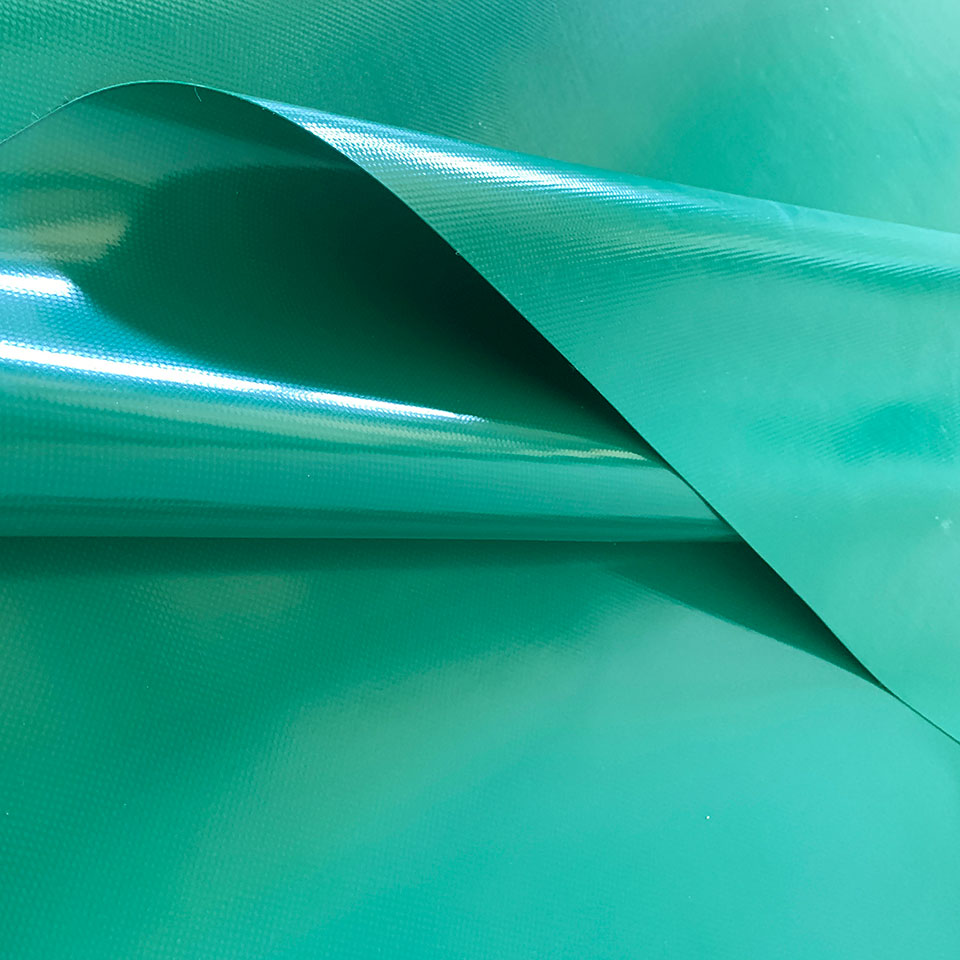
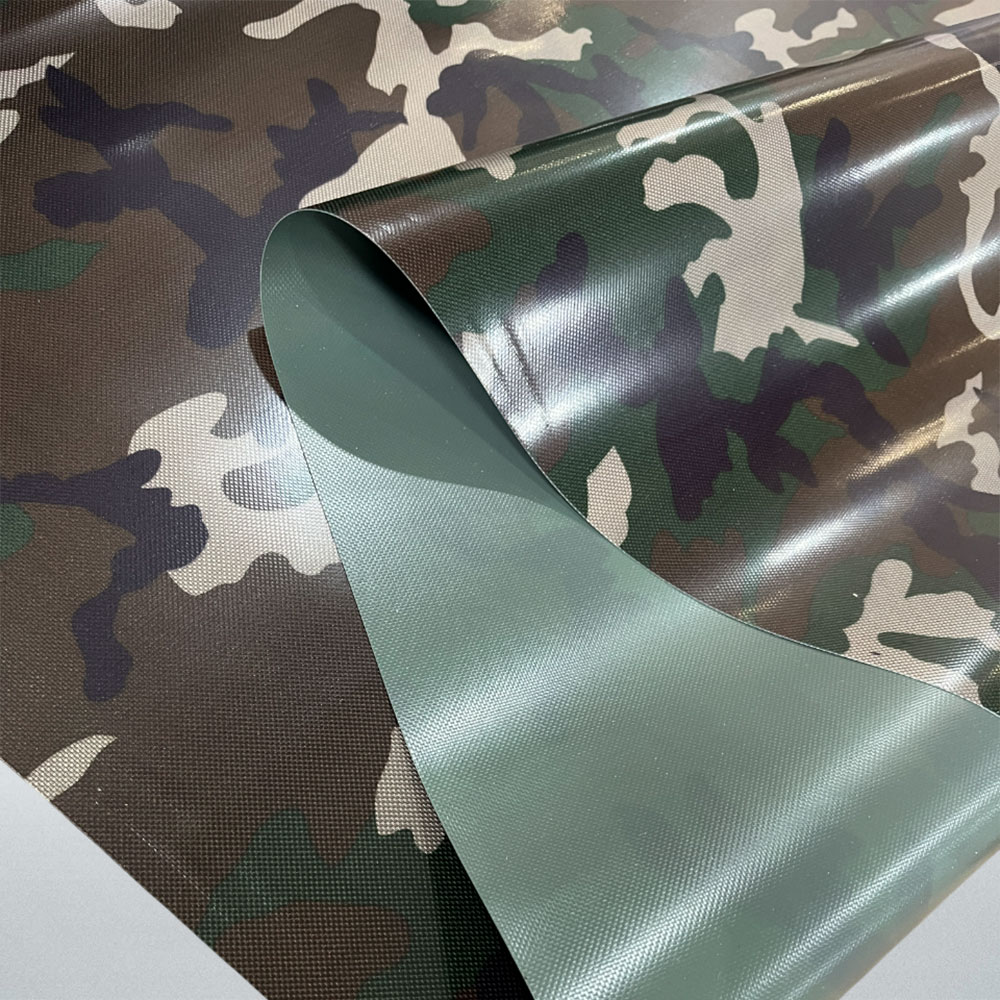
Glossy. The most common option. A smooth surface holds less dirt, washes more easily and lets water run off faster. The drawback is pronounced glare in sunlight, visible from a distance.
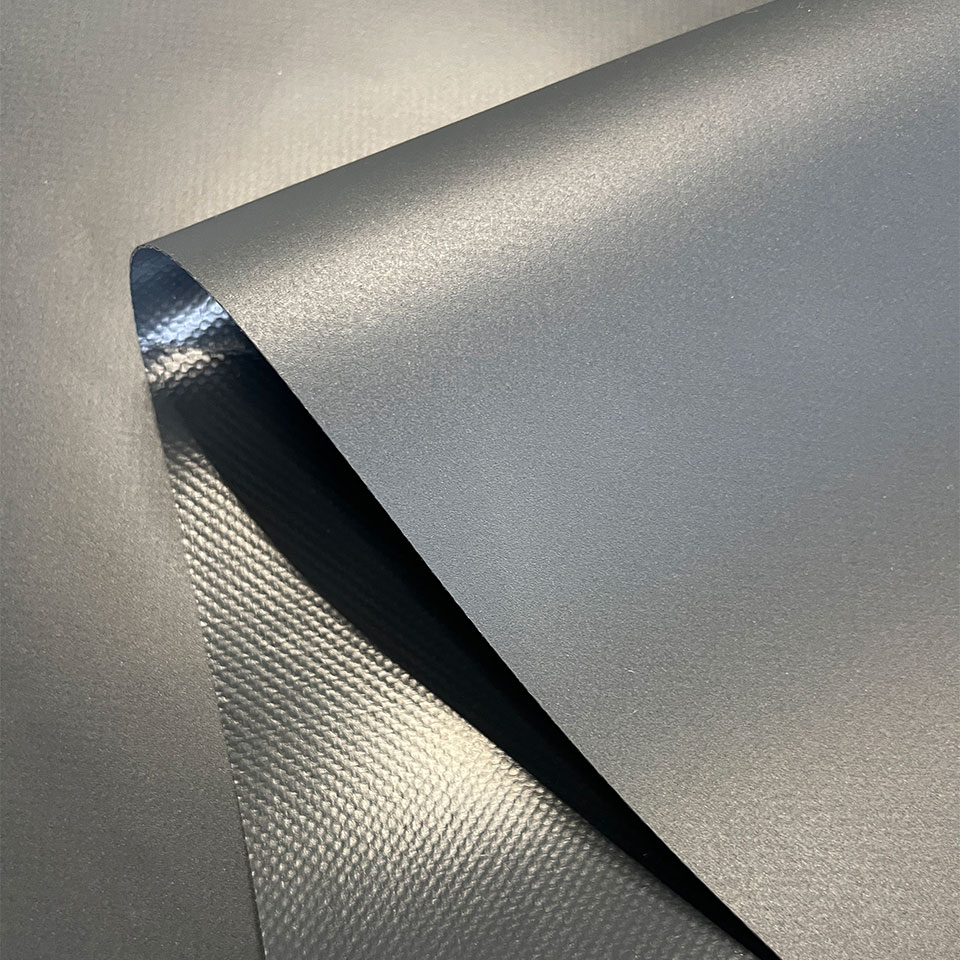
Matte. A micro-textured surface that scatters light. It looks more restrained, reflects less and shows fewer minor scratches and signs of use. Matte fabrics are often chosen where a tarp needs to look tidy over a long period: commercial transport and vehicles in corporate colours.
Camouflage. A separate category, relevant for military vehicles and transport operating in the field. The pattern is not the only consideration here: the colour scheme is selected to suit the environment in which the vehicle works.
About colour in general. Darker shades heat up more in the sun and show fading more clearly over time. Lighter ones heat up less but show dirt more readily. The choice here is mostly practical rather than aesthetic: it depends on where the vehicle works and how often it is washed.
Not sure which fabric suits your application? Tell us how the vehicle is used and we will recommend the material and colour.
Order a custom tarpConclusion: what to consider before ordering a vehicle tarp
A vehicle tarp looks like a simple product, but its service life is determined by decisions made before the fabric is even cut: which material, where the reinforcement goes, what spacing the fastenings need, how the sheet will behave at speed and where it meets the frame.
The material is only part of the answer. PVC provides waterproofing, resistance to sun and frost and the option of repair, but even the best fabric cannot compensate for inaccurate measurements or a fastening system chosen without regard for operating conditions. The reverse is also true: a well-designed product made from standard 650 g/m² fabric will outlast a more expensive tarp cut roughly to size.
So the most important thing to do before ordering is to take accurate measurements and describe honestly how the vehicle is used. The manufacturer should take care of the rest.
Need a custom vehicle tarp?
Send us the dimensions of the body, or simply describe what you need. We will prepare a quotation, recommend a suitable fabric and design, and answer any questions.
Consultation and quotation are free of charge.
