PVC Fabric 440 vs 630 g/m²: What’s the Difference and Which Weight Should You Choose?
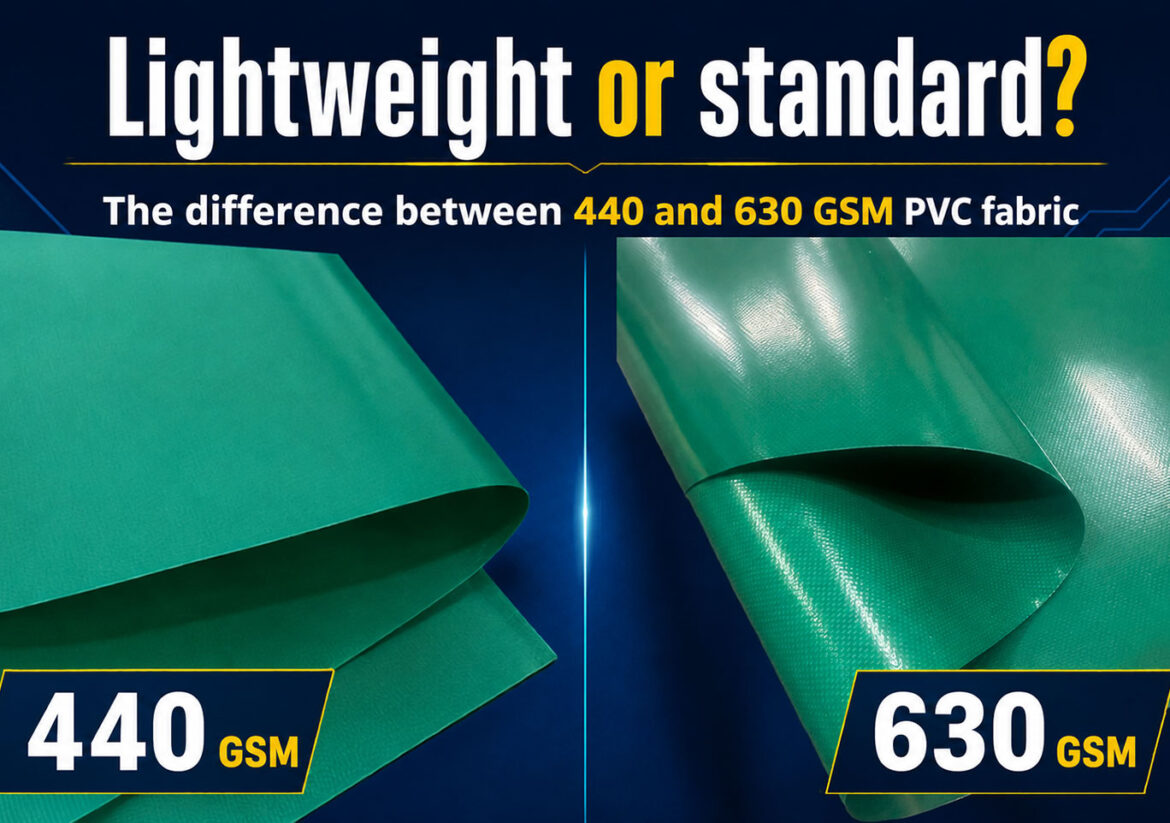
PVC fabrics at 440 and 630 g/m² both have a waterproof coating, can be welded, and are suitable for making covers, bags, and protective sheeting. The main practical difference lies in weight, thickness, flexibility, and the ability to withstand regular stress.
Lightweight PVC fabric 440 g/m² is more convenient for mobile and removable products. Standard PVC fabric 630 g/m² is more commonly chosen for vehicle covers, canopies, and other structures that are kept under constant tension or used outdoors. That said, density is not the only indicator of strength: you also need to consider the reinforcing base, PVC coating, adhesion, frost resistance, and the specific properties of each material.
Lightweight
PVC fabric 440 g/m²
- lighter finished product;
- easier to fold, carry, and install;
- suitable for moderate loads;
- covers, bags, seasonal and removable sheeting.
Standard
PVC fabric 630 g/m²
- thicker and heavier fabric;
- for regular tension and heavy-duty use;
- higher resistance to mechanical stress;
- vehicle covers, canopies, curtains, and fixed sheeting.
What PVC fabric density means
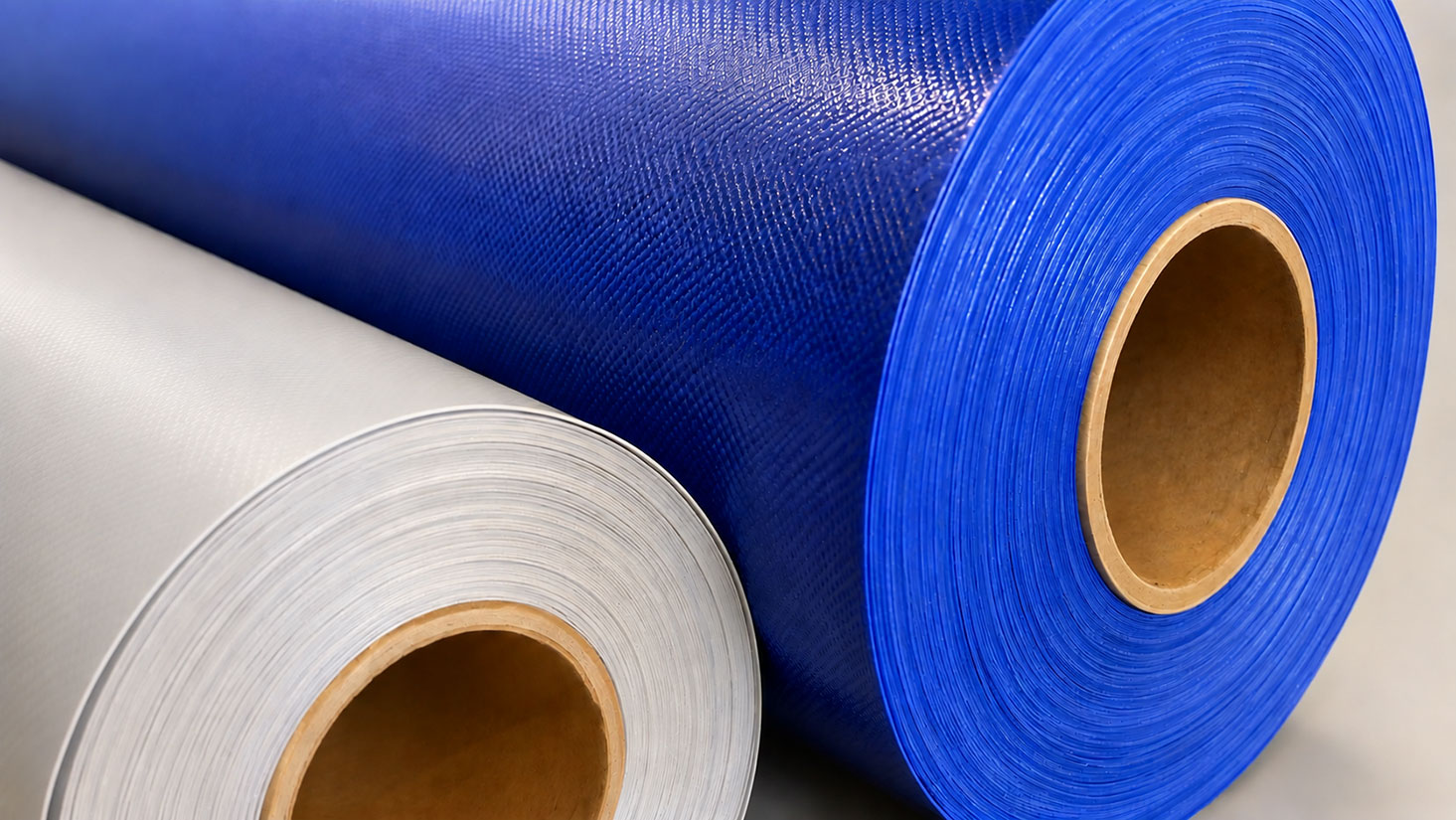
Density in g/m² indicates the weight of one square metre of material. So 10 m² of 440 g/m² fabric weighs approximately 4.4 kg, while 10 m² of 630 g/m² fabric weighs around 6.3 kg — not counting seams, fixings, and hardware. On a large cover, this difference becomes noticeable during installation, folding, and transport.
Higher density generally means a thicker fabric, but does not automatically guarantee better quality. Two fabrics of the same density can differ in polyester base structure, thread strength, PVC coating thickness, adhesion, and resistance to external factors.
When 440 g/m² PVC fabric is sufficient
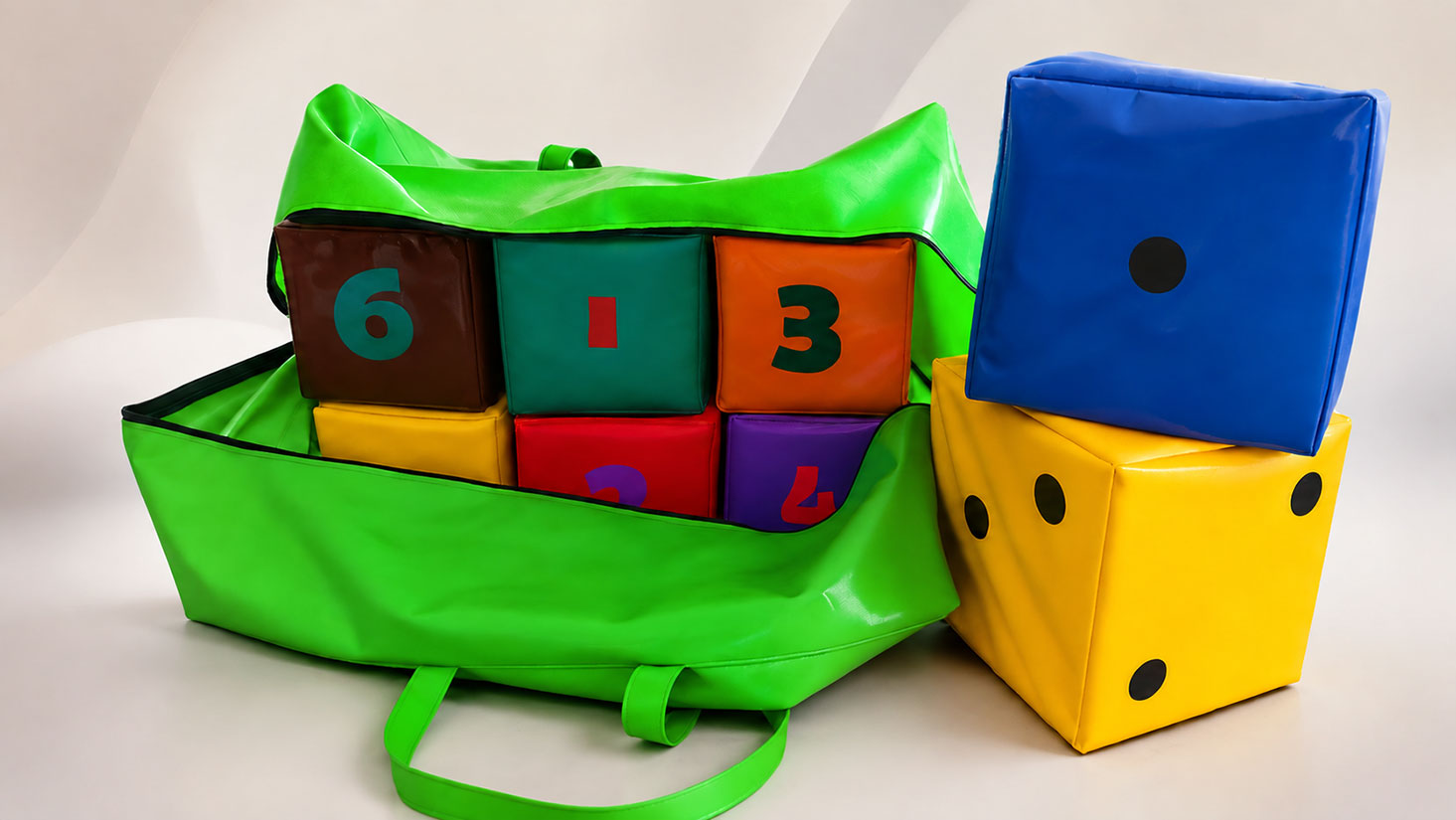
Lightweight PVC fabric 440 g/m² is the right choice where low weight, flexibility, and ease of handling matter, and where loads remain moderate.
- Protective covers for machinery, equipment, and garden furniture.
- Transport bags for tools, gear, and components.
- Seasonal and removable sheeting that is regularly folded or carried.
- Children’s and sports products: soft blocks, modules, and lightweight covers.
For a large cover, a product kept under constant tension, or a structure exposed to strong wind loads, the fabric must be selected carefully. Even seasonal use doesn’t always mean that lightweight material will be sufficient.
When to choose 630 g/m² PVC fabric
Standard PVC fabric 630 g/m² is more commonly chosen for products that are regularly subjected to tension, vibration, wind, and mechanical stress.
- Vehicle covers for trucks, trailers, semi-trailers, and pickups.
- Frame covers and canopies designed for long-term use.
- Tarpaulin curtains and partitions for industrial and warehouse spaces.
- Large protective covers where additional strength reserve is important.
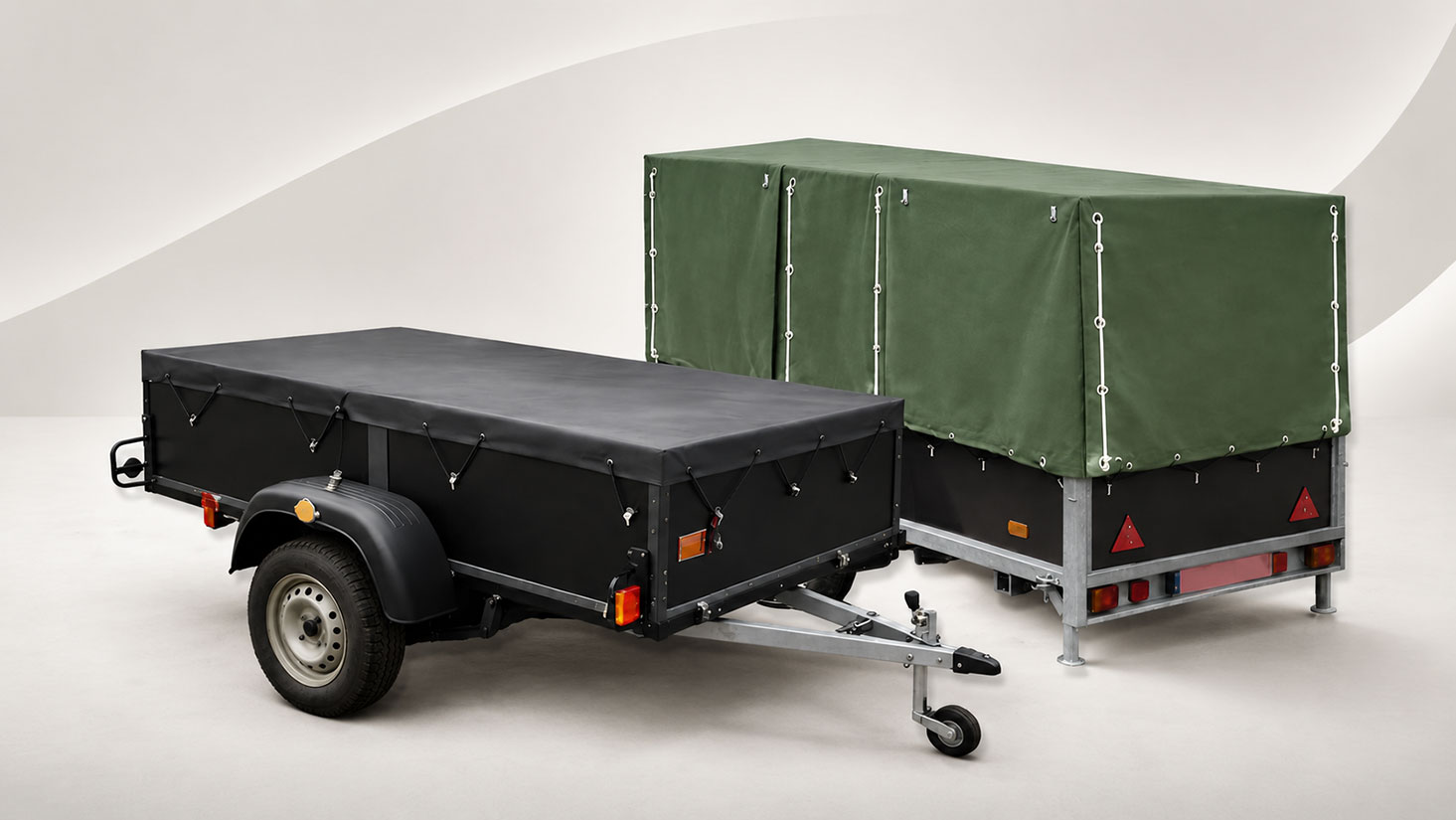
The greater weight of the standard fabric can be a drawback for a product that needs to be removed or carried frequently. So choosing 630 g/m² makes sense when its performance advantages outweigh the need for portability.
PVC fabric 440 vs 630 g/m² — comparison
| Parameter | 440 g/m² | 630 g/m² |
|---|---|---|
| Weight per 10 m² | Approx. 4.4 kg | Approx. 6.3 kg |
| Thickness and flexibility | Thinner, folds more easily | Thicker, stiffer to handle |
| Typical load | Moderate | Regular and heavy-duty |
| Product portability | More convenient for frequent folding and carrying | Heavier finished product |
| Joining method | Sewing, hot air, HF welding | Sewing, hot air, HF welding |
| Typical products | Covers, bags, mobile and seasonal sheeting | Vehicle covers, canopies, curtains, fixed sheeting |
| Waterproof coating | Yes | Yes |
The table shows typical practical differences. Exact thickness, tensile and tear strength, coating adhesion, frost resistance, and other parameters depend on the manufacturer, color, and specific batch of fabric. For technical projects, specifications should be verified against the material data sheet.
How to choose the right density for your product
When choosing, consider not just the material weight, but also the dimensions of the finished product, intensity of use, mounting method, and expected loads.
How often will the product be used?
For seasonal, temporary, and removable covers, 440 g/m² fabric is often sufficient. For regular or year-round use, 630 g/m² is more commonly chosen.
How important is the weight of the finished product?
If a cover needs to be removed, folded, and carried frequently, lightweight 440 g/m² fabric will be more convenient. If portability is not critical, a denser material can take priority.
What will the dimensions and mounting method be?
The larger the panel area and the greater the distance between mounting points, the higher the load on the fabric. You also need to account for eyelets, straps, pockets, hems, and reinforced zones.
Not sure which to choose? Tell us what the product is for, its dimensions, and how it will be used — we’ll help you compare the right materials.
Frequently asked questions about choosing PVC fabric
What is the difference between PVC fabric 440 g/m² and 630 g/m²?
Which fabric should I choose for a trailer cover?
Can both fabrics be HF-welded?
Is heavier PVC fabric always stronger?
Can I buy 440 and 630 g/m² fabric by the metre?
We’ll help you choose the right PVC fabric
We’ll check current stock availability and prepare a calculation for the quantity you need.